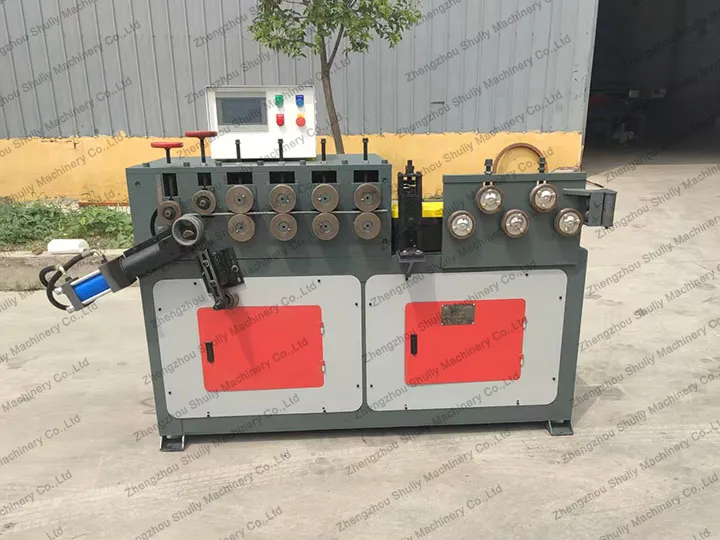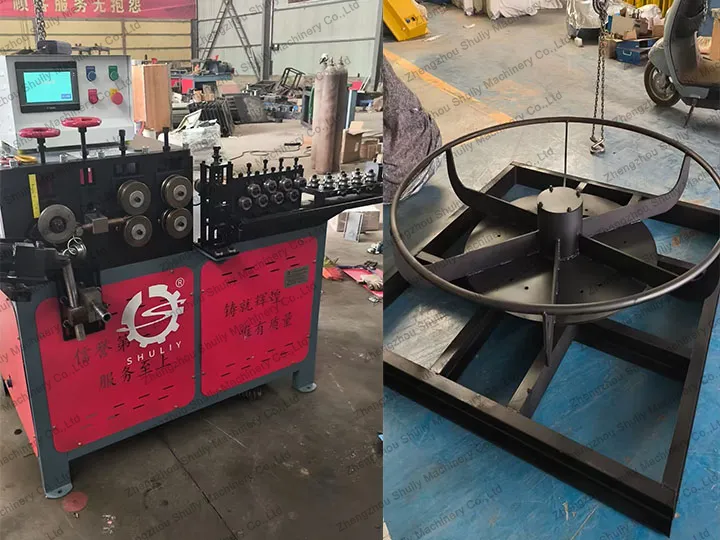
Double-Head Scrap Rebar Granulator Cutting Machine
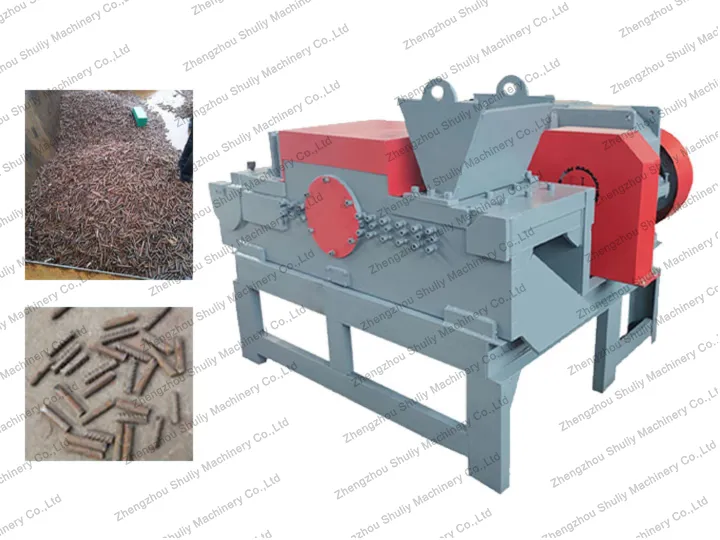
Steel Bar Granulating Machine | Rebar Cropping Machine
模型: 850#
Cutting capacity: Up to 32mm rebar
Cutting efficiency: 120 cuts/min (double-head)
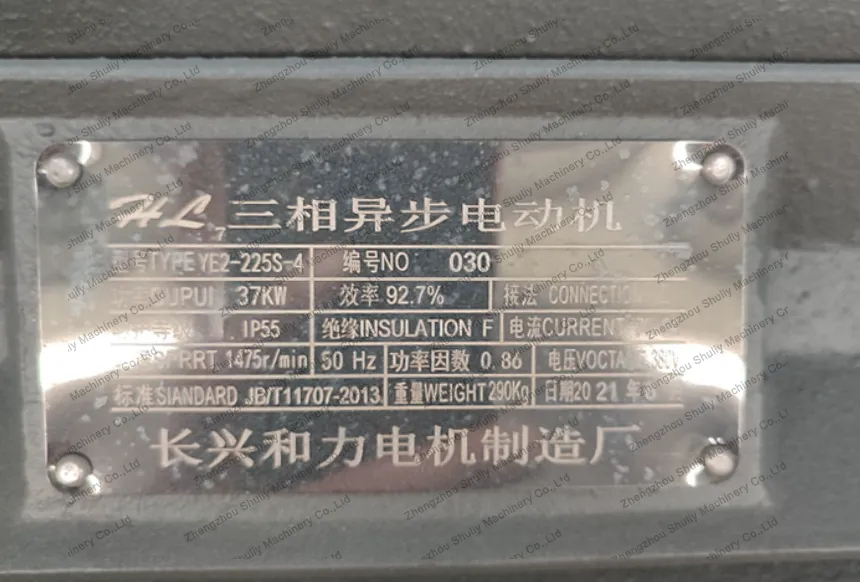
电机功率: 37 kW
Reducer model: 850#
电动机速度: 1450 rpm
机器重量: 4200 kg
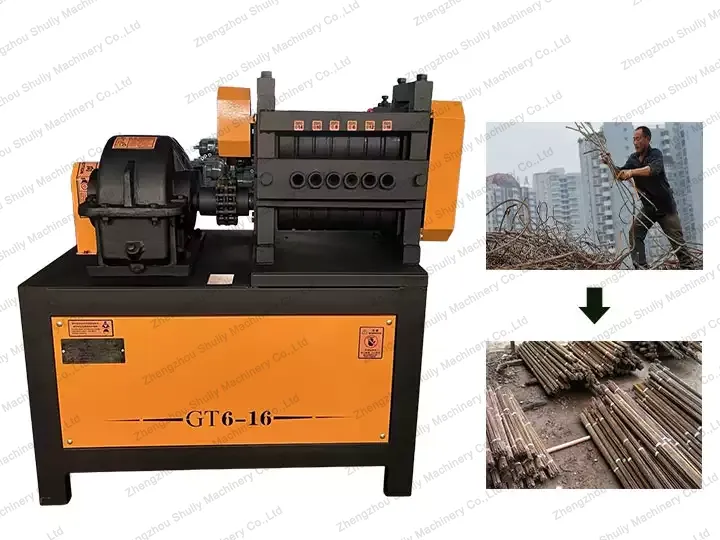
我们的 scrap rebar granulator—also sold as a rebar chopper, steel bar pelleting machine, or scrap steel bar granulator—shears scrap rebar, threaded rebar, and round bar into 30-80 mm pellets for steel smelting.
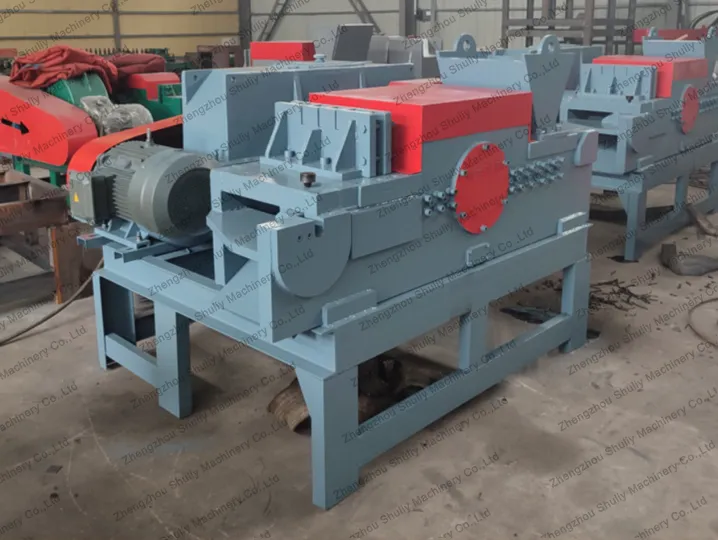
Our 850# model uses a double-head cutting system that delivers 120 cuts per minute and handles rebar up to 32 mm. A 37 kW copper-winding motor and a 60 mm reinforced steel plate body (4.2 t total) make it a reliable rebar cropping machine for scrap yards, demolition sites, and steel mill feed lines.
This guide covers the 850# scrap rebar granulating machine—specifications, design, materials, applications, and pricing—to help you pick the right steel bar granulating machine for your operation.
Whether you need a basic rebar cropping machine for daily scrap, an automatic double-end scrap rebar granulating machine for high throughput, or a complete scrap steel pelletizer line for direct furnace feed, the sections below give you the data to decide.
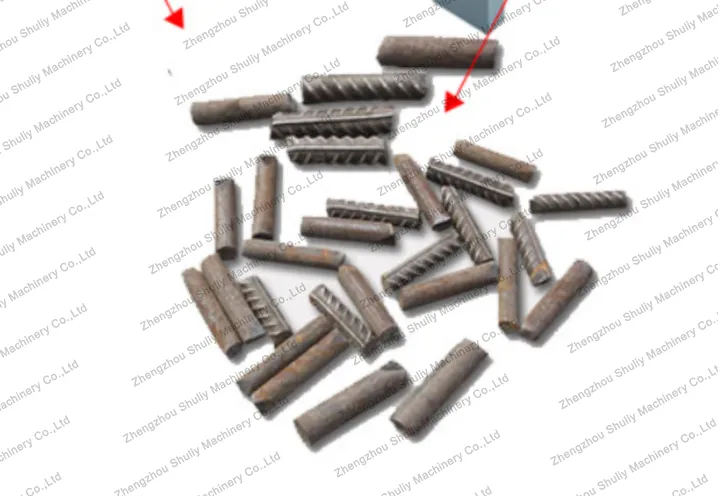
How does Scrap Rebar Granulator Work?
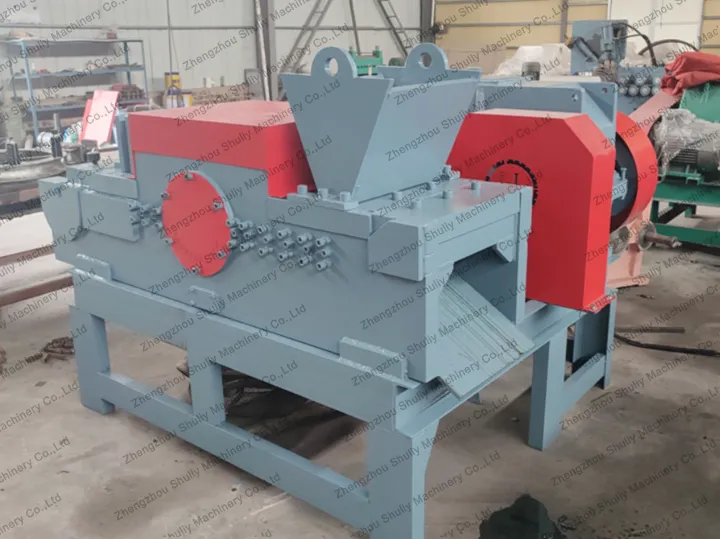
The 850# scrap rebar granulating machine works on a simple, rugged principle: a 37 kW motor drives a chain-and-gearbox transmission that spins twin cutting heads at controlled RPM.
The operator feeds rebar horizontally into the cutting chamber; rotating blades chop it into pellets that fall through a sizing screen at the bottom. The double-head layout delivers twice the throughput of single-head rebar chopper models in the same class.
The typical processing flow for a scrap steel bar granulator in a scrap yard is:
- Step 1: Receiving and sorting — scrap rebar from demolition sites, construction waste, or steel mill returns is sorted by diameter and grade
- Step 2: Pre-cutting (if needed) — rebar longer than 2 m is pre-cut to 1-2 m lengths using a guillotine shear or hydraulic cutting machine
- Step 3: Granulation — rebar is fed into the 850# scrap rebar granulator and chopped into 30-80 mm pellets at 120 cuts/min
- Step 4: Screening and collection — pellets fall through a sizing screen into a bin; oversized material returns for re-cutting
- Step 5: Baling or direct furnace feed — pellets are conveyed directly to the EAF charging bucket
Uniform 30-80 mm rebar pellets command 5-10% higher scrap prices than unsorted rebar at the mill gate: they charge faster, melt evenly, and reduce refractory wear inside the furnace.
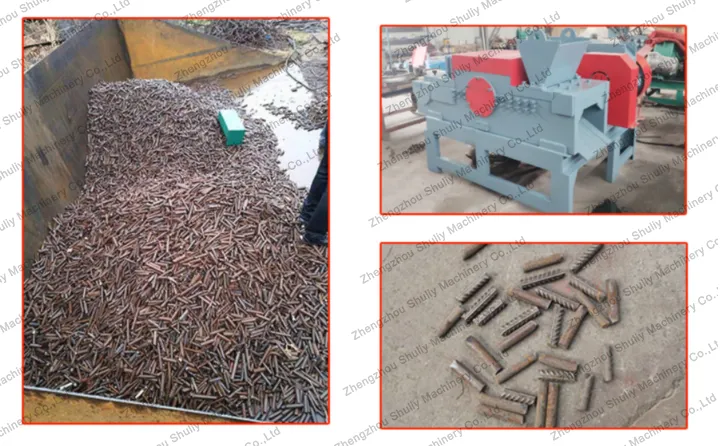
850# Scrap Rebar Granulator Specifications
Below are the technical specifications of the 850# steel bar granulating machine:
| 范围 | 规格 |
| 模型 | 850# |
| Cutting Capacity (Max Rebar Diameter) | 32 mm (threaded rebar and below) |
| Cutting Speed | 120 cuts/min (double-head design) |
| Motor Power | 37 kW (100% copper-winding) |
| Reducer Model | 850# (heavy-duty gear reducer) |
| Motor Speed | 1,450 r/min |
| Total Weight | 4,200 kg |
| Body Plate Thickness | 60 mm reinforced steel plate |
| Drive System | Heavy-duty chain + integrated gearbox |
| Standard Voltage | 380V / 50Hz 3-phase (415V/480V optional) |
| Pellet Length Range | 30-80 mm (adjustable screen) |
| Throughput (Estimated) | 1.5-3 tons/hour (depending on rebar diameter and operator skill) |
The 4.2-ton weight is a deliberate design choice. A heavier scrap rebar granulator cutting machine absorbs cutting shock, prevents walking, and runs 24/7 on a level concrete floor without anchor bolts. Budget rebar cropping machine models under 2 t usually need embedded anchors—and still shift on heavy cuts, throwing blades out of alignment and wearing them prematurely.
3 Heavy-Duty Design Features of 850# Rebar Granulating Machine
Three design choices set the 850# scrap rebar granulator apart from lighter-duty models:
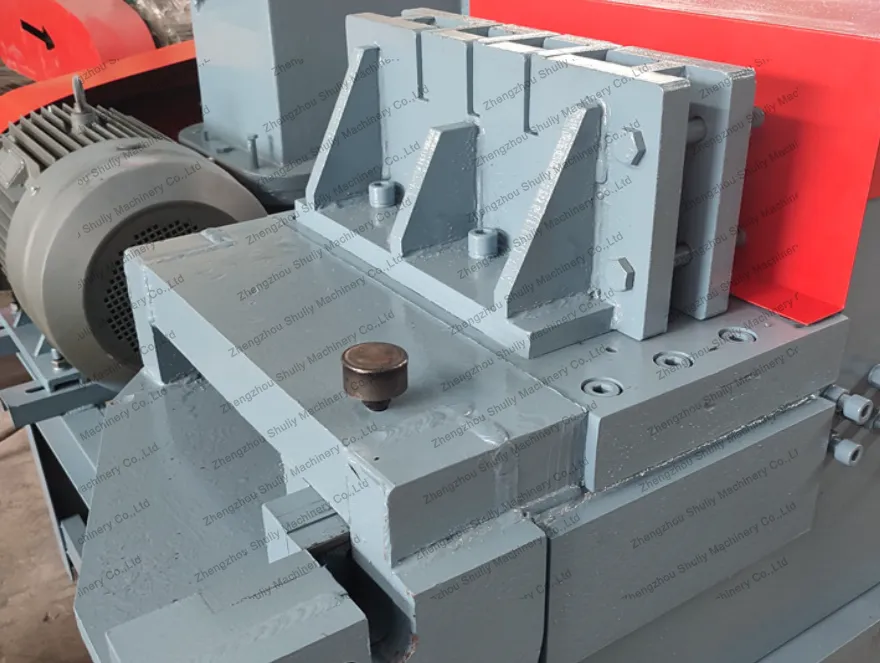
1. Reinforced 60mm Steel Plate Body (4.2 Tons Total Weight)
- 60 mm steel plate—roughly twice the 30-40 mm thickness used in most competing scrap rebar cutting machines. It can absorb the 1,500-2,500 N·m impact of each cut without flexing, keeping its geometry and running 8-10+ years in scrap yard conditions.
- The 4.2 t mass doubles as a passive vibration damper. When working, the scrap rebar granulator is planted on a level concrete floor—no anchor bolts needed. This matters for scrap yards that reconfigure equipment often.
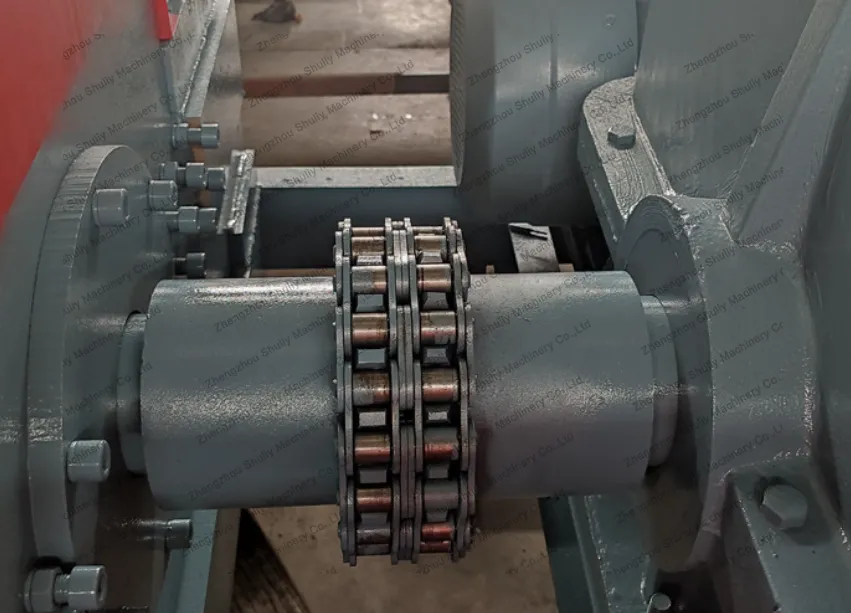
2. Heavy-Duty Chain Drive Shaft
- An integrated chain links the speed reducer to the gearbox: a more stable connection and can handle the shock of interrupted cuts. When a blade hits a knot or hard spot in the rebar, the chain absorbs the spike without slipping or breaking.
- The chain drive cuts maintenance by roughly 70% (no tensioning, no 3-6 month belt swaps) and transmits 95%+ of motor power even under variable load. It is rated for 2-3x the 37 kW motor’s peak torque—a wide safety margin.
3. 37 kW Copper-Winding Motor (100% Copper)
- 37 kW motor with 100% copper windings. Many budget scrap rebar granulators use aluminum windings to save cost; those motors run 20-30°C hotter and burn out within 18-24 months of continuous scrap yard duty.
- For 32 mm HRB400 rebar—the grade scrap yards see most—peak cutting torque reaches 1,800-2,200 N·m. The 37 kW motor at 1,450 r/min delivers that torque with a 30-40% reserve, so the heads never stall on hard spots. The 850# reducer further multiplies torque to the cutting head, keeping cuts smooth across the full 6-32 mm diameter range.
Materials a Scrap Rebar Granulating Machine Can Process
The 850# scrap rebar granulator handles the following scrap materials:
| Material Type | Diameter Range | Common Grades | 笔记 |
| Deformed rebar (HRB) | 6-32 mm | HRB400, HRB500, B500B | Most common; ribbed surface; standard demolition scrap |
| Round bar (mild steel) | 6-32 mm | Q235, SS400, A36 | Smooth surface; easier cutting; faster throughput |
| Threaded rebar | 12-32 mm | PSR830, PSB830 | Pre-threaded; high hardness; requires sharp blades |
| Scrap angle/channel steel | Up to 50×50 mm angle | Q235, Q345 | Pre-cut to 200-500 mm lengths before granulation |
| Wire rod coils | 6-12 mm | Q235 wire rod | Pre-straightened; cut into short pellets |
Common Applications of Scrap Rebar Cutting and Cropping Machine
The 850# scrap steel bar pelletizer serves four main recycling applications:
- Scrap Yard Processing
- Demolition Site Processing
- Steel Mill Internal Recycling
- Automobile Shredder Residue Processing
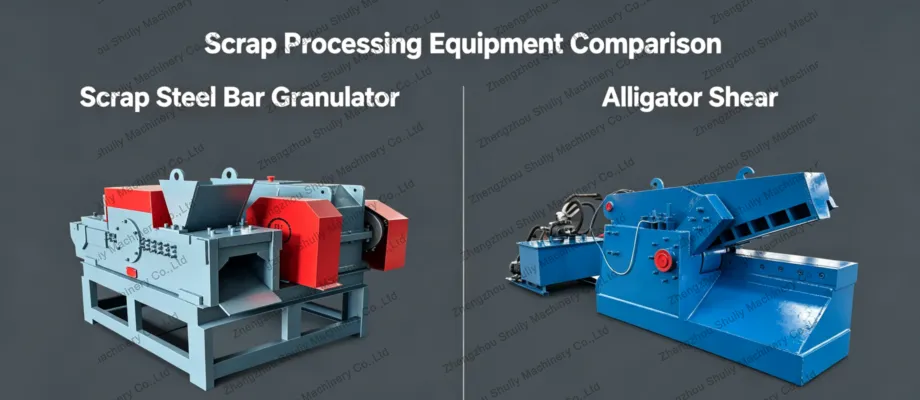
Scrap Rebar Granulator vs Hydraulic Alligator Shear
How does a scrap rebar granulating machine stack up against a 液压鳄鱼剪? The two machines play different roles in a scrap yard workflow:
| Factor | Scrap Rebar Granulator (850#) | 液压鳄鱼剪 |
| Output size | Uniform 30-80 mm pellets | Variable 100-2,000 mm lengths |
| Throughput | 1.5-3 tons/hour | 2-8 tons/hour (larger cuts) |
| Pellet value | Premium (5-10% higher price) | Standard scrap |
| Best use | EAF/induction furnace feed | Pre-cutting, scrap baling feed |
| Power consumption | 37 kW continuous | 15-22 kW intermittent |
| Blade maintenance | Every 200-400 hours (rotation) | Every 500-1,000 hours (regrind) |
| Price range | $2,000-$8,000 | $3,000-$10,000 |
Most mid-size and large scrap yards run both machines in series: a hydraulic alligator shear pre-cuts long rebar to 1-2 m sections, then the 850# double-end scrap rebar granulator cutting machine finishes them into pellets. The combination delivers the highest throughput and the most uniform pellets.
For small yards with limited capital, a single rebar chopper like the 850# is often the better buy—its premium pellets typically pay back the higher price within 12-18 months.
Price Factors for a Scrap Steel Bar Granulating Machine
Three factors drive the final scrap rebar granulator price:
- Blade material and configuration: Standard Cr12MOV blades ship with the machine. Optional carbide-tipped blades for stainless steel or hard HRB500 rebar add $300-800. Most buyers order 2-3 sets of replacement blades for continuous operation.
- Voltage and motor customization: 380V/50Hz standard. 415V/50Hz (Middle East, India), 480V/60Hz (USA, Mexico), or 220V/380V/60Hz (Brazil) configurations add $200-500 for motor rewinding and control panel adjustment.
- Conveyor and screening options: Standard discharge is gravity-fed into a bin. Optional discharge conveyor ($800-1,500), vibratory screening table ($1,200-2,000), and dust collection hood ($400-800) add to the total package but improve operator safety and pellet quality.
For project-specific pricing on a rebar chopper (multiple units, custom voltage, or mobile configuration), contact our sales team with your scrap type, daily output target, and delivery port. Most quotes come back within 24 hours.
Why Choose Shuliy 850# Scrap Rebar Granulator?
- Lower lifetime cost than budget choppers: This machine can cut downtime, blade swaps, and motor replacements. Most buyers report payback within 12-18 months from lower maintenance alone.
- 2x throughput of single-head models: 120 cuts/min. For yards running 8+ hours per day, the extra capacity is the difference between one shift and two.
- Drop-in installation: No anchor bolts, no special foundation. Re-deploy the machine between yards or job sites without breaking out concrete.
- Pellets that earn premium pricing: Uniform 30-80 mm pellets from the 850# consistently sell for 5-10% above mixed-length scrap at the mill gate. The machine more than pays for itself on material value alone.
Scrap Rebar Granulator FAQ
What rebar diameter can a scrap rebar cropping machine cut?
Below 32 mm.
How fast does a scrap rebar granulating machine cut?
The 850# double-head scrap rebar cropping machine delivers 120 cuts per minute, processing 1.5-3 tons of rebar per hour depending on bar diameter and operator skill.
How long do the blades last on a scrap rebar pelletizing machine?
200-400 hours.
How much does a scrap rebar granulator cost?
Price ranges from $2,000 to $8,000. For details, please contact us at any time!
What power supply does a scrap steel bar granulator need?
The 850# steel bar granulating machine requires 3-phase 38oV/50Hz power (standard in China, Europe, Middle East, Africa, Russia). 415V/50Hz (India, parts of Middle East), 480V/60Hz (USA, Canada, Mexico), and220V/380V/60Hz (Brazil) configurations are available with motor rewinding.
Get a Scrap Rebar Granulator Quote
For a scrap rebar granulator machine configured to your rebar diameter range, voltage, and daily output, contact our engineering team. We supply single units and project-quantity orders (3+ units) with container loading optimization.
Most quotes come back within 24 hours, and our scrap rebar cutting machine specialists will recommend the right model, blade configuration, and accessories for your scrap yard, demolition site, or steel mill operation.